Location: Hunan, China
Project Type: Engineering Vehicle Manufacturing
Scope: Automated Welding Production Management & Quality Control
Period: 2025
Introduction
As part of YEZRO’s commitment to manufacturing quality assurance and production optimization, our team participated in the supervision and quality control of an automated welding production line for engineering vehicle chassis structures in Hunan, China.
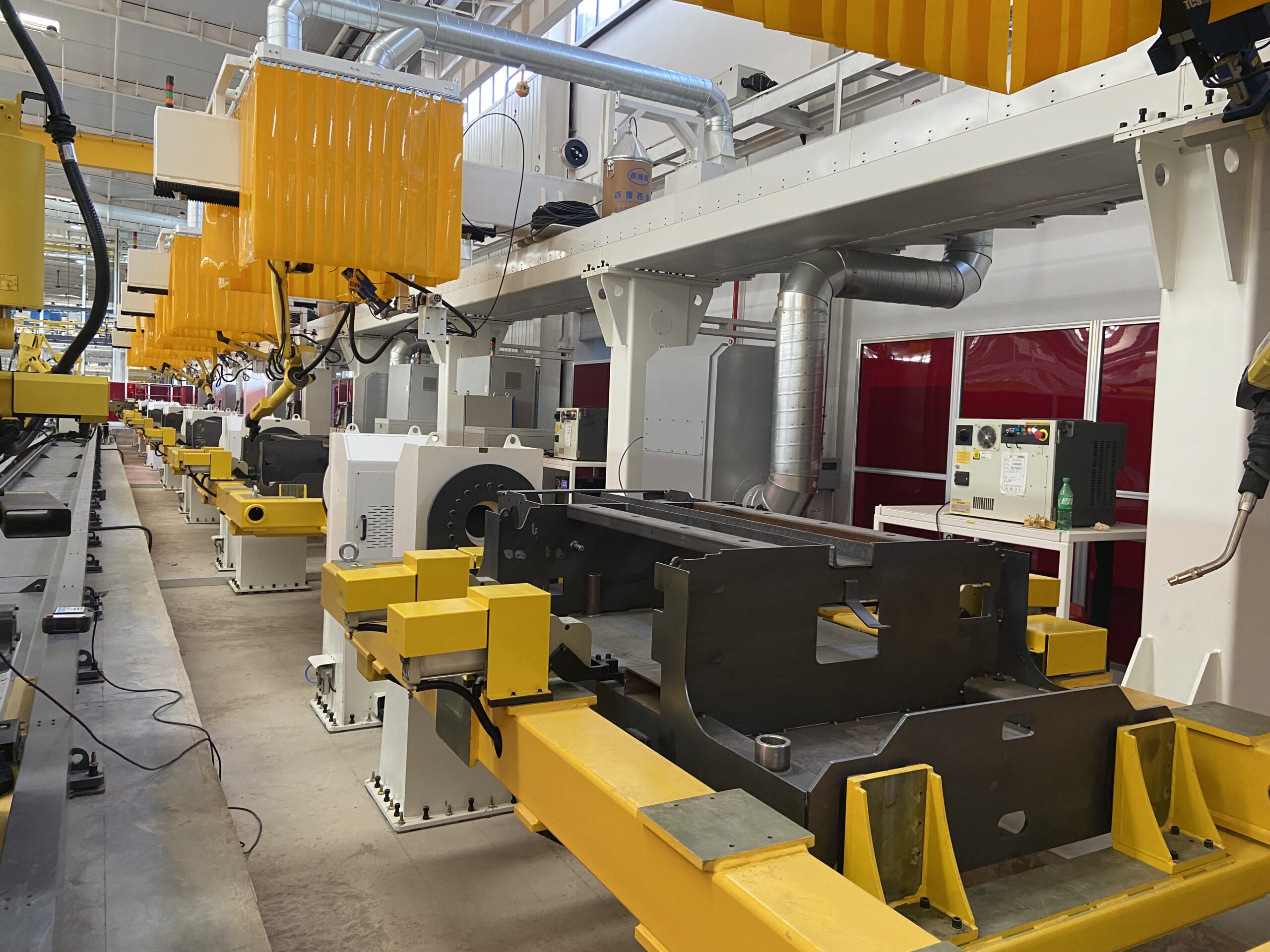
The project involved robotic welding systems, automated material handling equipment, positioners, welding fixtures, and production rhythm planning to ensure stable output, dimensional accuracy, and weld quality throughout the manufacturing process.
Production Planning and Capacity Management
To satisfy customer delivery requirements and sales forecasts, production targets were translated into daily manufacturing schedules.
The production engineering team established:
- Daily production quantity targets
- Single-piece production takt time
- Workstation allocation strategy
- Equipment utilization planning
- Workforce balancing
According to the approved production instruction, the welding cycle time for each chassis assembly was approximately 98 minutes, covering loading, positioning, robotic welding, unloading, and quality verification activities.
This planning approach ensured efficient production flow while maintaining product quality consistency.
Automated Welding System
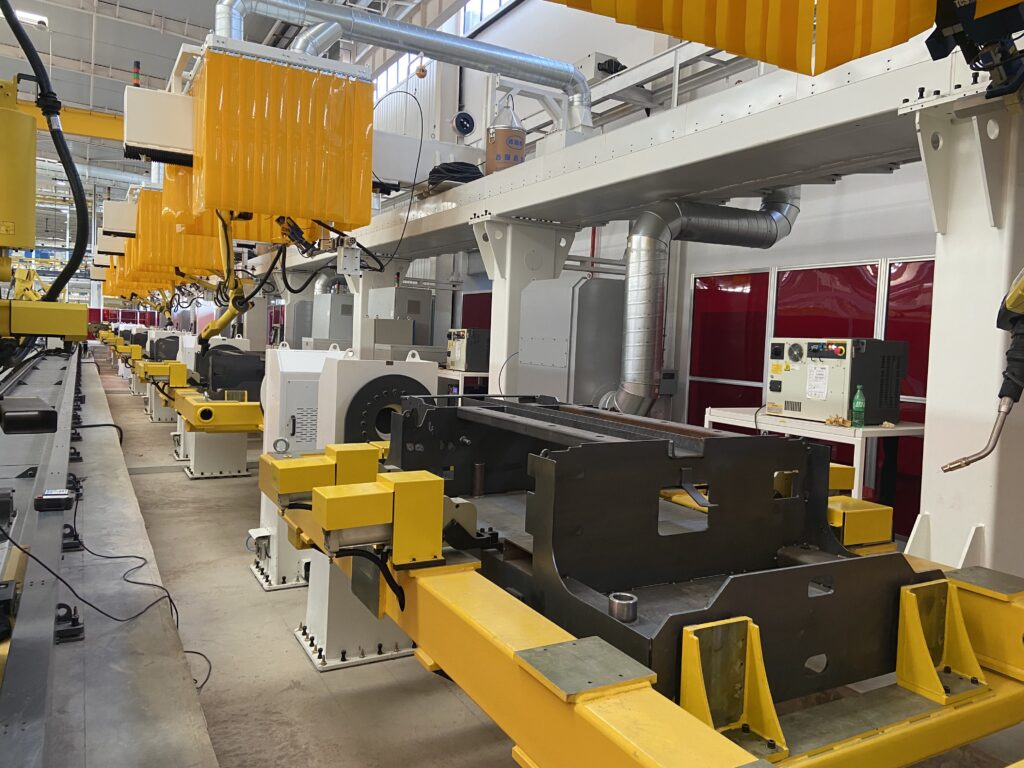
The chassis fabrication line utilized advanced automation equipment including:
- FANUC M-900iB material handling robot
- Robotic arc welding stations
- HN positioners and welding fixtures for new design
- TPS500i welding power sources
- Automated workpiece locating systems
After loading, the workpiece was automatically clamped by the fixture system. Welding robots then performed seam tracking and programmed welding sequences to complete structural welds with repeatable quality and high productivity.
The automated production concept significantly reduced manual intervention while improving welding consistency.
Welding Quality Assurance
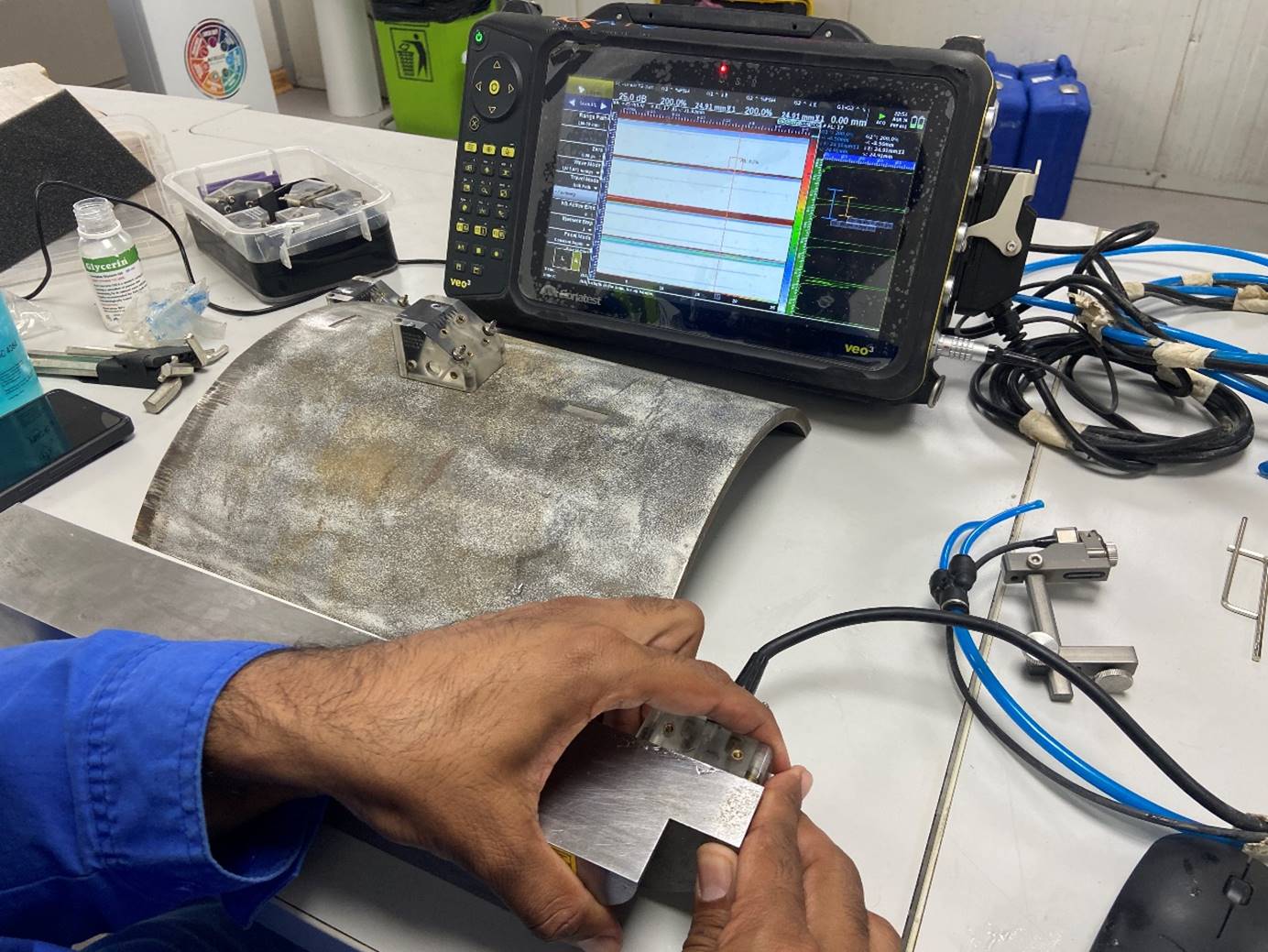
Quality control activities focused on:
- Welding procedure compliance
- Fixture positioning accuracy
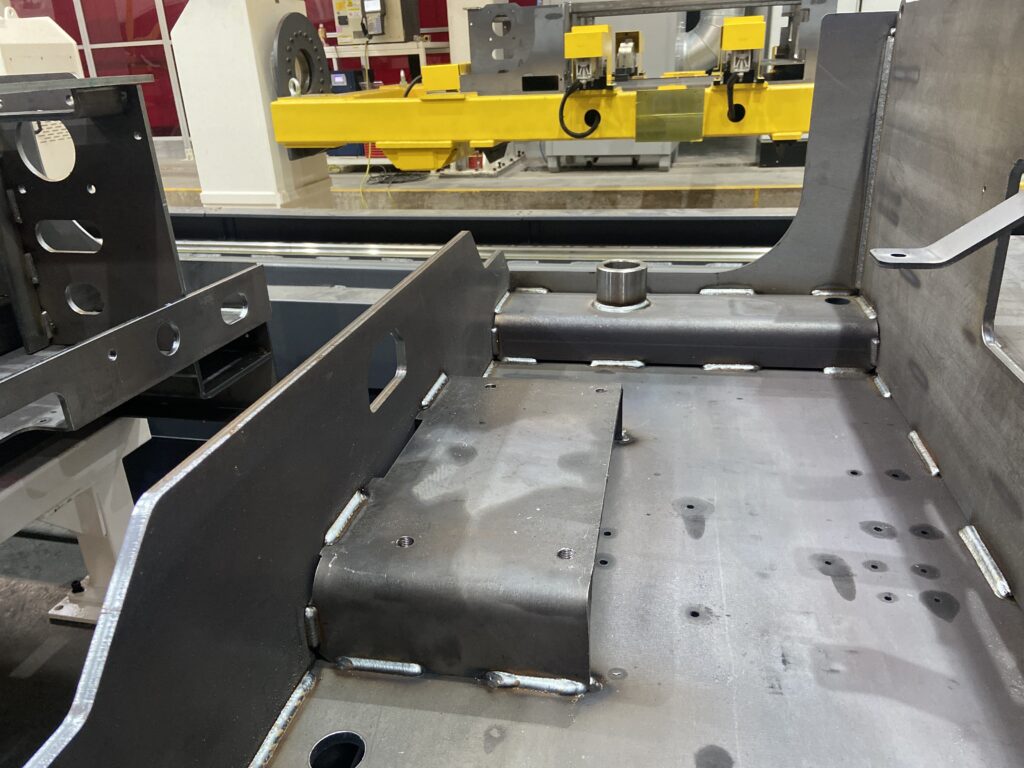
- Weld appearance inspection
- Dimensional verification
- Heat input consistency
- Robot path validation
- Equipment condition monitoring
Prior to each production shift, operators performed equipment inspections and parameter verification according to maintenance and calibration requirements.
Particular attention was given to critical load-bearing welds within the chassis structure to ensure conformity with engineering drawings and manufacturing specifications.
Lean Manufacturing and Process Optimization
By integrating production planning with automated welding technology, the manufacturing system achieved:
- Stable production takt time
- Reduced handling operations
- Improved repeatability
- Enhanced welding quality
- Increased production efficiency
The implementation demonstrated how digital manufacturing and robotic welding technologies can support modern engineering vehicle production while maintaining high quality standards.