Project: Jack up fabrication Site, Nantong, China
Client: MPI and KS drilling.
Role: Site Quality Manager / Welding supervisor
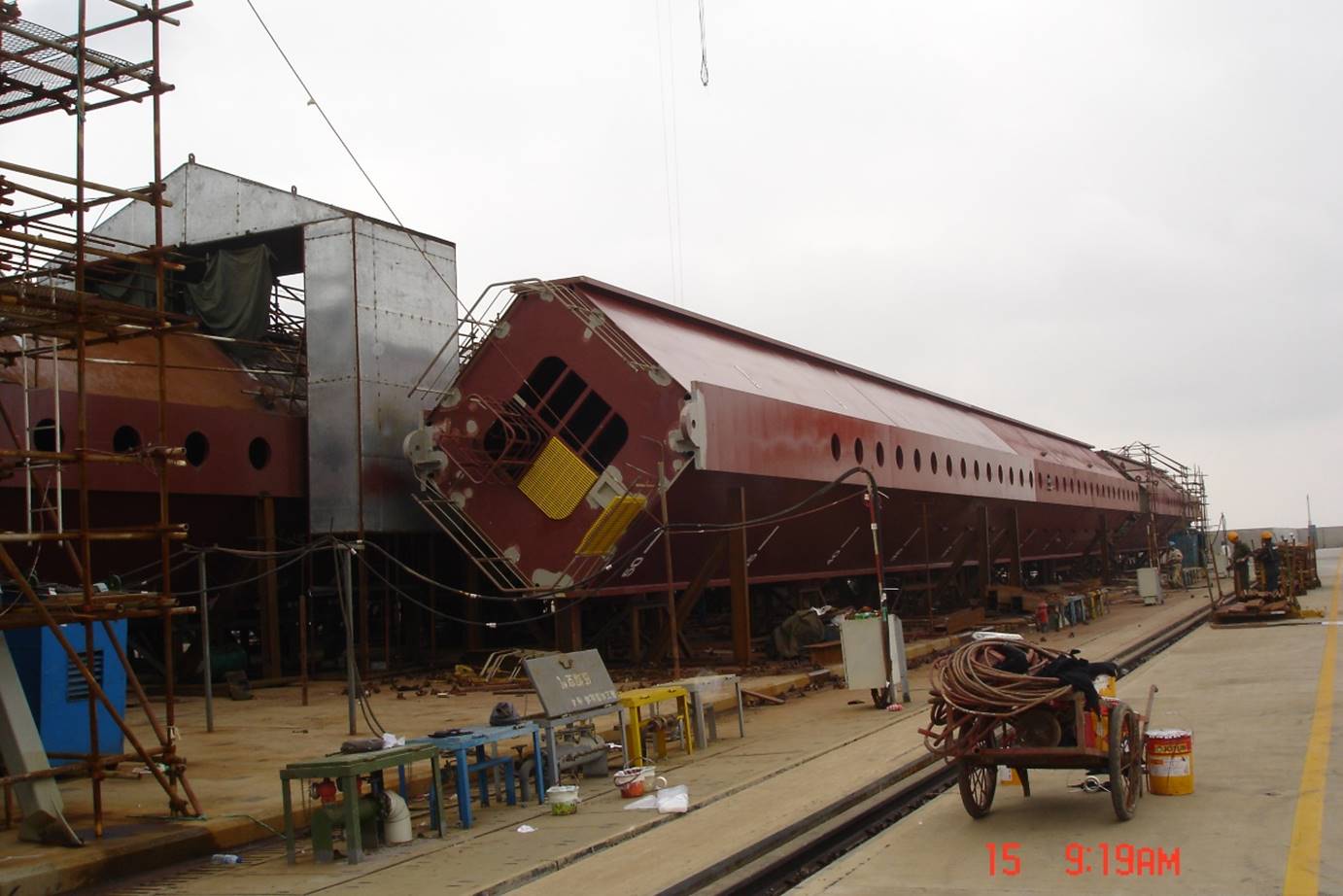
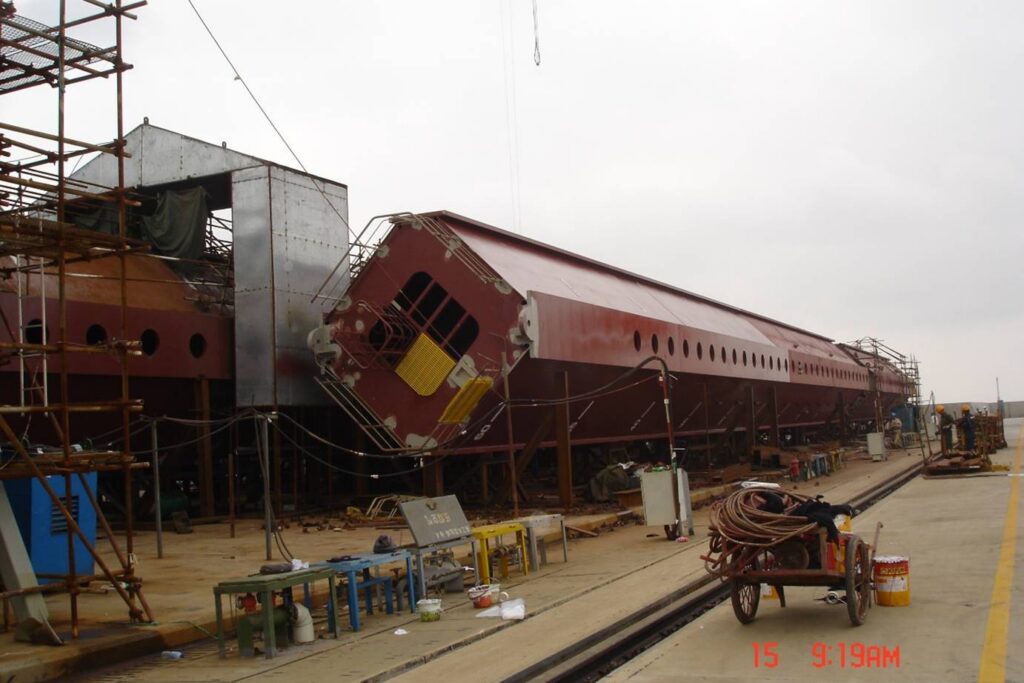
YEZRO personnel participated in the fabrication quality surveillance of offshore wind turbine installation vessels and jack-up drilling units, focusing on the construction of jack-up leg structures and rack chord assemblies.
These critical structural components form the primary load-bearing system of self-elevating offshore units and are subjected to severe environmental and operational loading throughout their service life. Structural integrity, dimensional accuracy, fatigue resistance, and welding quality are therefore essential to long-term operational reliability.
The projects involved fabrication of large box-type leg structures and rack chord assemblies manufactured from high-strength offshore steels including EQ690, E690, and NV420 grades, with material thicknesses reaching up to 120 mm.
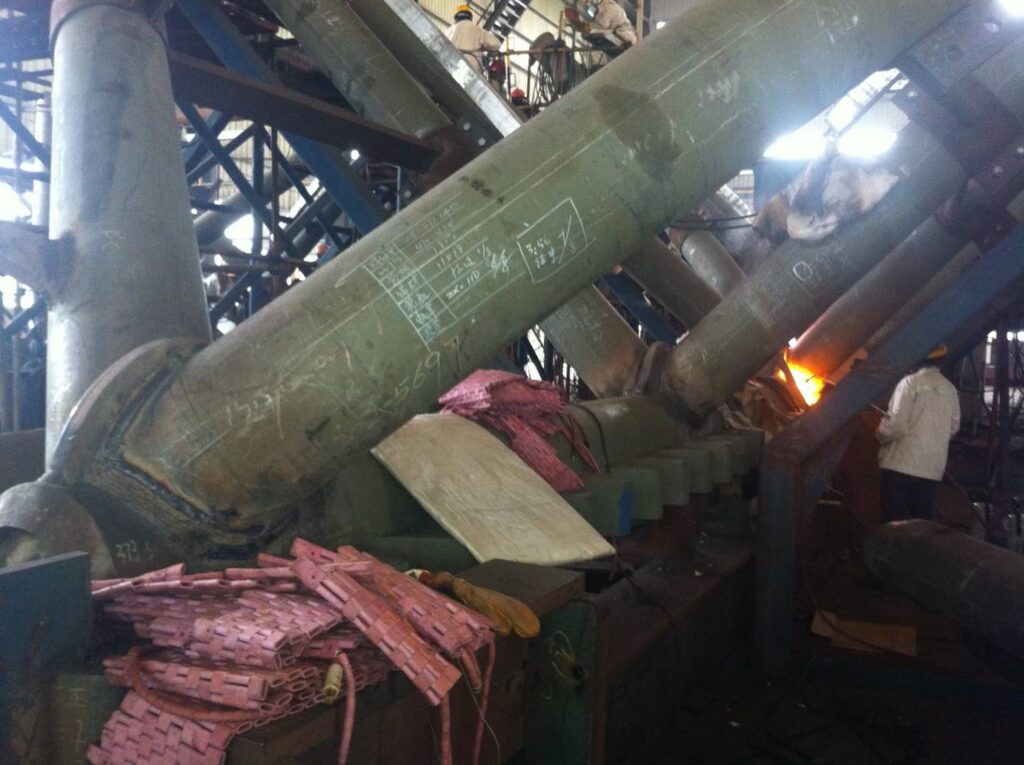
Due to the combination of high yield strength, heavy wall thickness, and complex TKY joint configurations, fabrication presented significant challenges in welding control, distortion management, hydrogen cracking prevention, and dimensional compliance.
Incoming Material Inspection and Traceability Control
Quality surveillance commenced from the material receiving stage.
Inspection activities included:
- Verification of Material Test Certificates (MTC)
- Heat number traceability checks
- Surface condition examination
- Dimensional verification
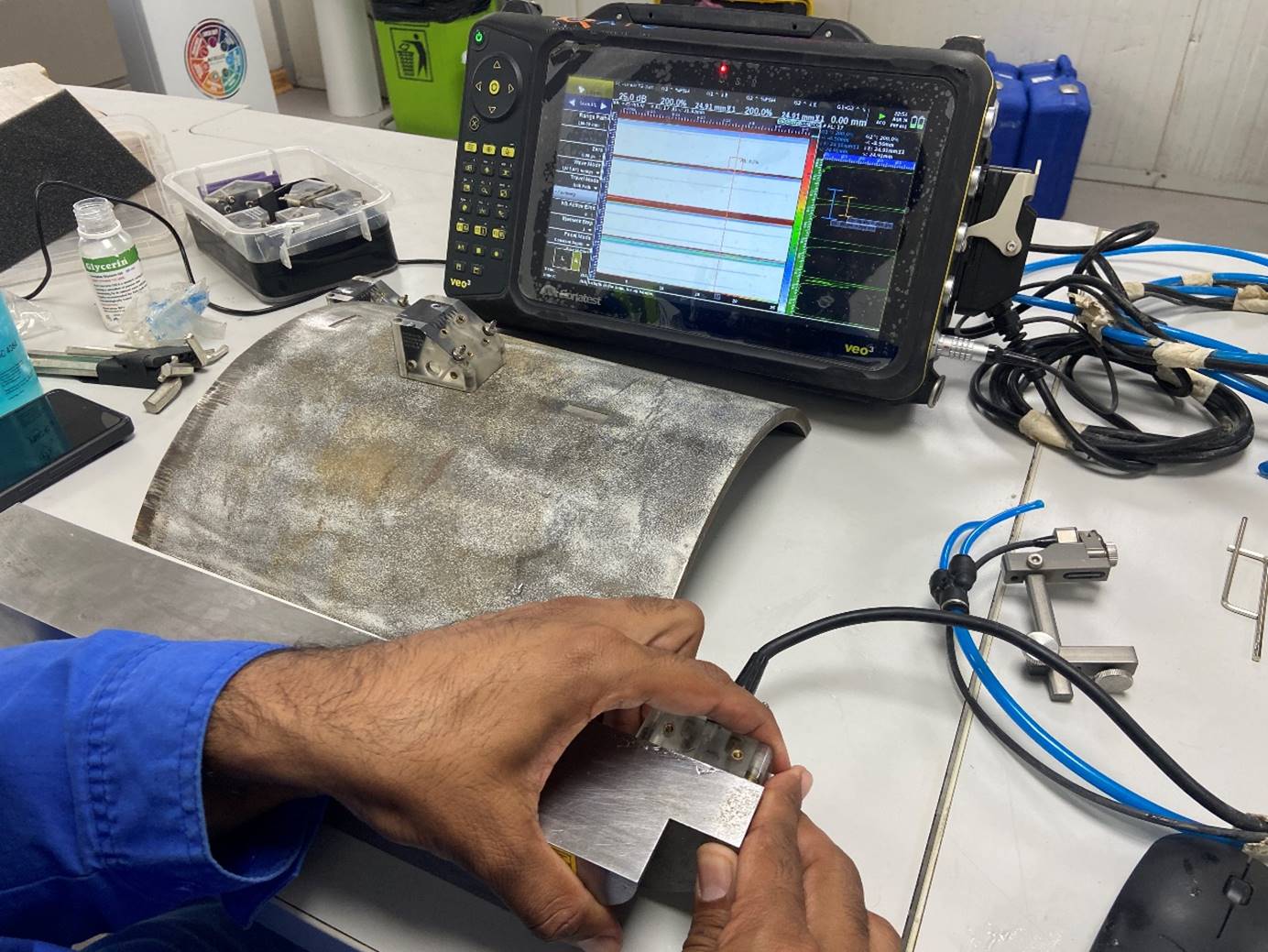
- Random Ultrasonic Testing (UT) examination
- Lamination and internal defect assessment
Particular attention was given to thick-section high-strength steel plates where internal discontinuities could significantly affect structural performance.
All materials were released for fabrication only after compliance with project specifications and classification society requirements.
Cutting, Bevel Preparation and Dimensional Control
Prior to assembly, all structural members underwent detailed dimensional verification.
Inspection activities covered:
- Layout marking verification
- CNC cutting quality
- Edge preparation inspection
- Bevel angle measurement
- Root face verification
- Tolerance control
Critical dimensions were recorded throughout fabrication to maintain alignment and prevent cumulative dimensional deviations during final assembly.
Assembly and Fit-Up Surveillance
The jack-up leg structures incorporated numerous heavy-section tubular and box-type members connected through complex TKY node configurations.
YEZRO inspectors monitored:
- Joint fit-up quality
- Root gap consistency
- Misalignment control
- Tack welding quality
- Temporary attachment management
- Structural alignment
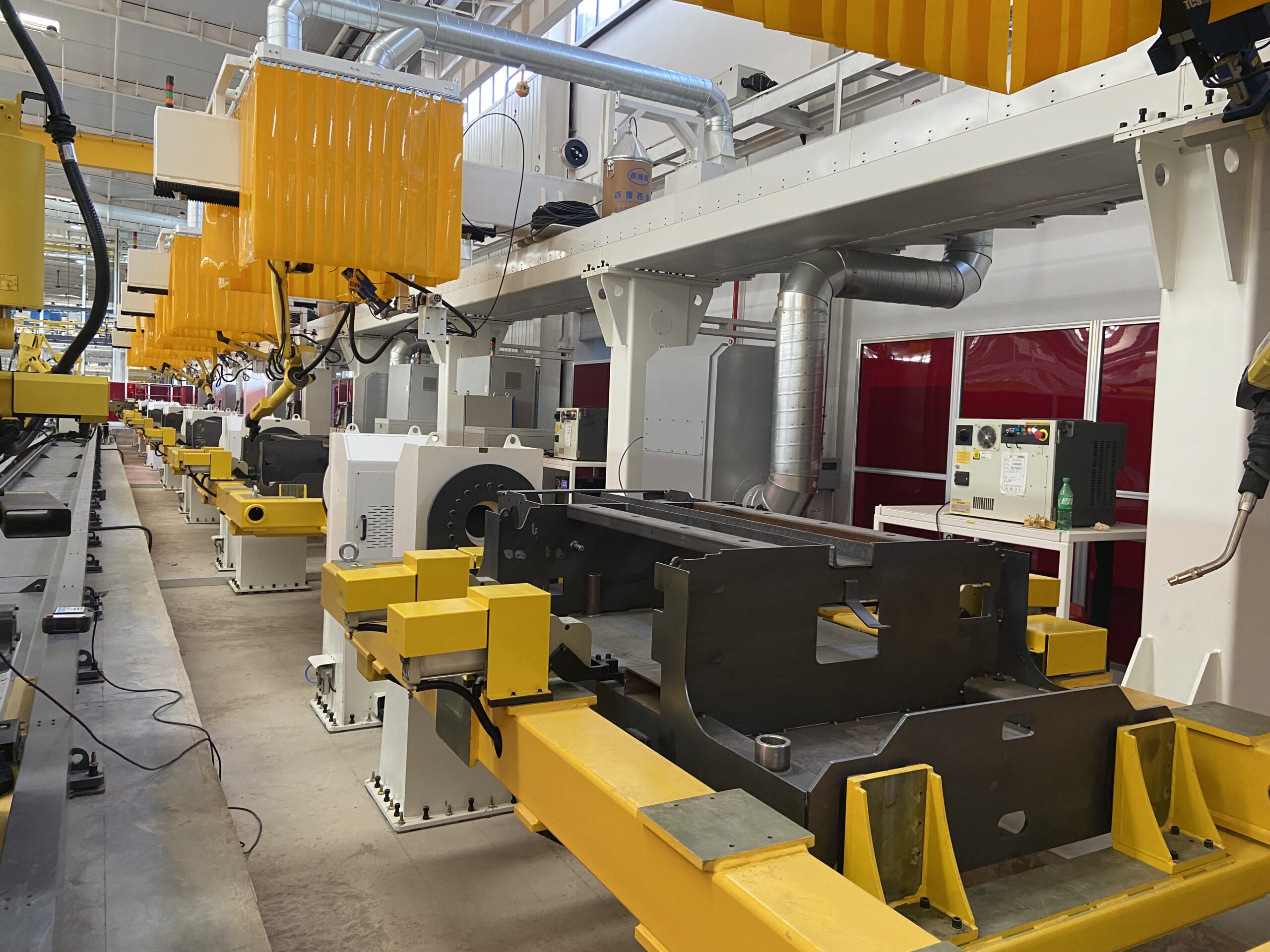
Specialized assembly fixtures and strong-back arrangements were utilized to minimize distortion and maintain dimensional stability throughout welding operations.
Welding Procedure Implementation
The welding stage represented one of the most critical aspects of fabrication.
Due to the susceptibility of EQ690 and NV420 steels to hydrogen-assisted cracking, comprehensive surveillance was conducted to ensure strict compliance with approved Welding Procedure Specifications (WPS).
Inspection activities included:
- Verification of qualified welding procedures
- Monitoring of welding parameters
- Verification of welder qualifications
- Joint preparation examination
- Interpass cleaning inspection
- Heat input control
Particular emphasis was placed on controlling heat input to balance mechanical property requirements while minimizing residual stress and distortion.
Welder Qualification and Performance Management
A dedicated welder training and qualification program was implemented prior to production welding.
Only experienced welders demonstrating consistent performance during qualification testing were assigned to critical structural joints.
YEZRO participated in:
- Welder qualification reviews
- Production performance monitoring
- Repair trend analysis
- Continuous welding quality assessment
This proactive approach significantly improved first-pass acceptance rates and reduced repair welding throughout the project.
Welding Consumable Control
Strict consumable management procedures were implemented to minimize the risk of hydrogen-induced cracking.
Inspection activities included:
- Electrode baking verification
- Holding oven temperature monitoring
- Flux handling supervision
- Consumable traceability control
- Storage condition inspection
Maintaining low-hydrogen welding conditions was essential for achieving sound weld quality in thick high-strength steel sections.
Preheating, Hydrogen Diffusion Treatment and Controlled Cooling
For plate thicknesses up to 120 mm, thermal management was a key quality control activity.
YEZRO personnel witnessed and verified:
- Preheat temperature compliance
- Interpass temperature control
- Post-weld hydrogen diffusion treatment
- Thermal insulation application
- Controlled cooling procedures
These measures effectively reduced residual stress levels and mitigated the risk of delayed hydrogen cracking, which represents one of the primary fabrication concerns for ultra-high-strength offshore steels.
Rack Chord Fabrication and Distortion Control
Rack chord fabrication required exceptional dimensional accuracy.
The rack system directly interfaces with the vessel jacking mechanism, meaning any dimensional deviation could adversely affect load transfer and operational performance.
Quality surveillance focused on:
- Rack tooth positioning accuracy
- Rack pitch consistency
- Straightness control
- Welding sequence optimization
- Distortion monitoring
- Assembly fixture effectiveness
Through implementation of optimized welding sequences, dedicated restraint tooling, and continuous dimensional inspections, fabrication-induced deformation was successfully controlled.
NDT and Structural Integrity Verification
Comprehensive non-destructive testing was performed throughout fabrication.
Inspection activities included:
- Visual Testing (VT)
- Magnetic Particle Testing (MT)
- Ultrasonic Testing (UT)
- Weld profile examination
- Repair verification inspections
Particular attention was given to TKY node welds and critical fatigue-sensitive areas where structural reliability is essential for long-term offshore operation.
The majority of production welds achieved first-pass acceptance, resulting in exceptionally low repair rates throughout construction.
Final Assembly and Dimensional Verification
Following completion of fabrication, comprehensive dimensional surveys were conducted on individual leg sections and completed rack chord assemblies.
Critical parameters verified included:
- Overall straightness
- Structural alignment
- Rack tooth geometry
- Chord spacing
- Assembly tolerances
- Interface dimensions
All critical dimensions were confirmed to be within project and classification society requirements.
Project Outcome
Through comprehensive quality surveillance covering material inspection, fabrication control, welding management, thermal treatment verification, non-destructive examination, and dimensional inspection, the project achieved outstanding quality performance.
The completed jack-up leg and rack chord structures satisfied stringent offshore construction requirements while maintaining excellent dimensional accuracy, low weld repair rates, and full compliance with applicable technical specifications.
This project further demonstrated YEZRO’s capability in supporting the fabrication of large-scale offshore structures, offshore wind installation vessels, jack-up units, and other critical marine engineering assets through professional inspection, welding surveillance, and quality assurance services.
From material verification to final dimensional survey, YEZRO provided continuous quality surveillance throughout the fabrication of critical offshore jack-up structures. Our experience in high-strength steel welding, heavy-section fabrication, NDT coordination, and dimensional control helps clients achieve safe, reliable, and compliant offshore assets with minimal repair rates and maximum construction efficiency.